Professional Insights
The Dentist's Perspective: Why the Industry is Moving Beyond Fluoride

By Dr. Evelyn Moss, DDS
For over seventy years, a single compound has dominated preventative dentistry: fluoride. Touted as one of the greatest public health achievements of the 20th century, synthetic fluoride became the default active ingredient in almost every commercial toothpaste.
Yet, inside modern biological and holistic dental practices worldwide, a significant paradigm shift is underway. Dental professionals are increasingly questioning the one-size-fits-all reliance on fluoride and turning toward a superior, biocompatible alternative: nano-hydroxyapatite (n-Ha).
The Chemistry of Defense: Fluoride vs. n-Ha
To understand why the industry is moving beyond fluoride, we must look at the biochemistry of enamel remineralization. Enamel is primarily composed of hydroxyapatite crystals, represented by the chemical formula:
Ca₁₀(PO₄)₆(OH)₂
When you brush with a standard fluoride toothpaste, the fluoride ions react with the calcium on your teeth to create a thin, synthetic barrier layer of fluorapatite:
Ca₁₀(PO₄)₆F₂
While fluorapatite is slightly more acid-resistant than natural hydroxyapatite, it has notable biological drawbacks:
Surface-Level Only: Fluoride cannot penetrate deeply into damaged enamel; it only forms a microscopic coating on the outer surface.
Systemic Risks: Fluoride is a neurotoxin when ingested in significant amounts. With children's toothpastes, ingestion is a constant hazard, and growing research highlights potential effects on thyroid and metabolic health.
Dentin Tubules: Fluoride does not seal exposed dentin tubules, meaning it is ineffective at directly treating root-cause tooth sensitivity.
The Rise of Biocompatible Remineralization
Biological dentists prioritize materials that work in harmony with the body's natural physiology. That is why nano-hydroxyapatite has become the ingredient of choice.
Because n-Ha is chemically identical to the natural building blocks of your enamel, it performs a process called biomimetic remineralization:
Deep Mineral Penetration: The nano-sized particles (\(20 - 50\text{ nm}\)) are small enough to enter deep micro-cavities and micro-fissures, binding directly with exposed enamel sheets to rebuild tooth structure from within.
Dentin Tubule Sealing: n-Ha physically plugs the thousands of microscopic exposed tubules leading to the tooth nerves, stopping sensitivity immediately and naturally.
100% Swallow-Safe: Since it is composed of calcium and phosphate ions (the body's natural minerals), n-Ha is completely non-toxic. It is swallow-safe for children and adults alike.
Why Dentists Choose Lunovya
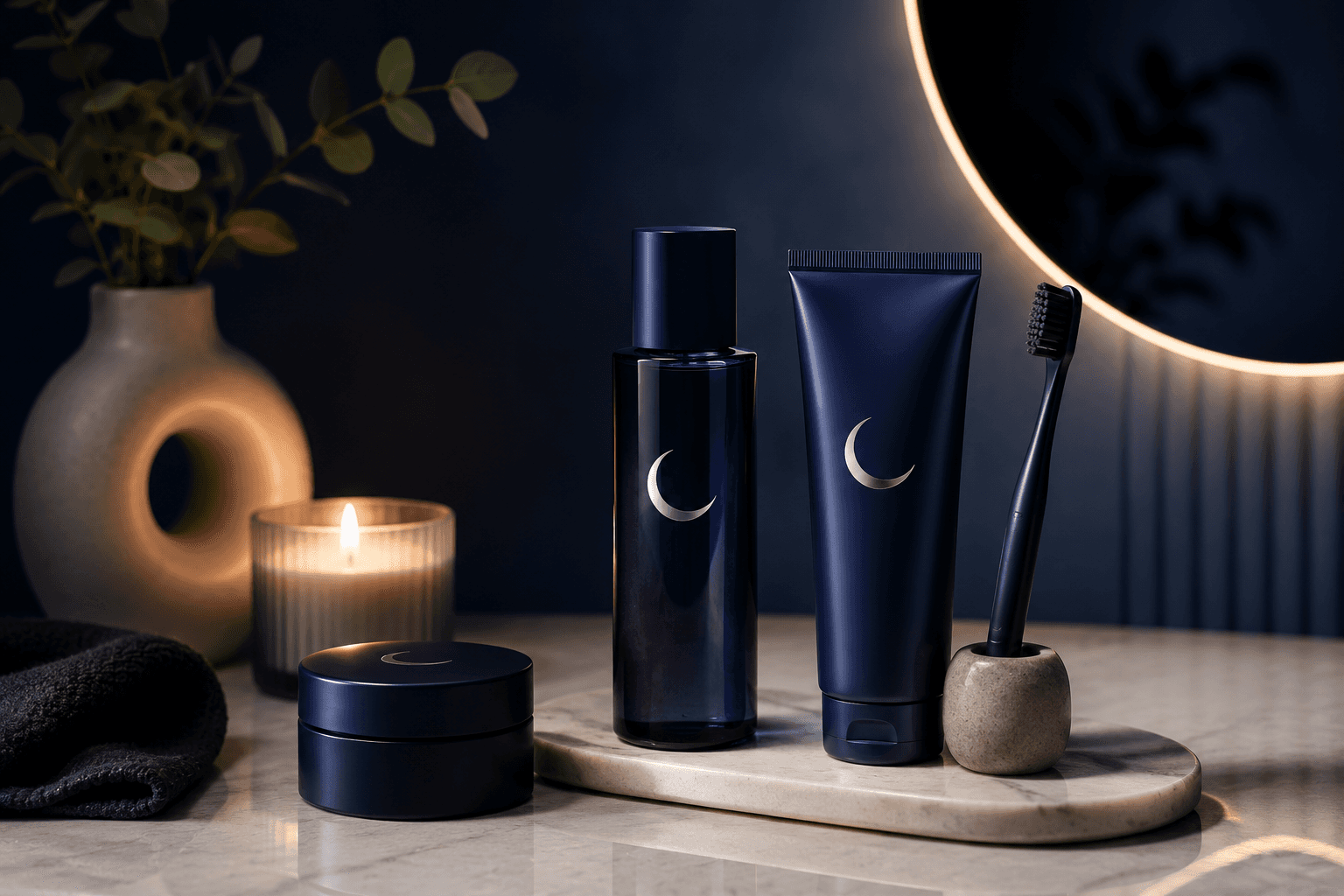
Transitioning to a fluoride-free lifestyle does not mean sacrificing cavity protection. In fact, clinical trials demonstrate that toothpastes formulated with a high percentage of nano-hydroxyapatite (like Lunovya's 10% Luna Night Paste) are just as effective, if not more effective, than standard fluoride pastes at reversing early caries and blocking dentin sensitivity.
By pairing remineralizing n-Ha with prebiotic plant extracts to support the oral microbiome, Lunovya provides the comprehensive, biology-first defense that modern dental medicine demands.
Experience Biomimetic Care
Incorporate nano-hydroxyapatite and prebiotic science into your daily self-care routine with the Sol & Luna system.
Related Articles