Scientific Research
The Science of n-Ha in Modern Oral Care

By Dr. Evelyn Moss, DDS
For decades, the global standard for dental decay prevention has relied on a single active chemical: fluoride. However, a quiet revolution is taking place under the microscope. Dental professionals, chemists, and wellness advocates are shifting their focus toward a biocompatible mineral that does not simply protect enamel from the outside, but actually rebuilds it from within: Nano-hydroxyapatite (n-Ha).
To understand why n-Ha is transforming modern oral care, we must first look at the atomic structure of our teeth.
The Mineral Matrix of Enamel
Tooth enamel is the hardest substance in the human body, but it is not alive. It is a crystalline structure composed almost entirely (97%) of a mineral called calcium phosphate, specifically in the form of hydroxyapatite crystals:
Ca₁₀(PO₄)₆(OH)₂
Every time we eat acidic foods, drink coffee, or experience dry mouth, hydrogen ions dissolve these crystals in a process called demineralization. Over time, this loss of minerals creates microscopic cavities and exposes the underlying layer of the tooth: the dentin.
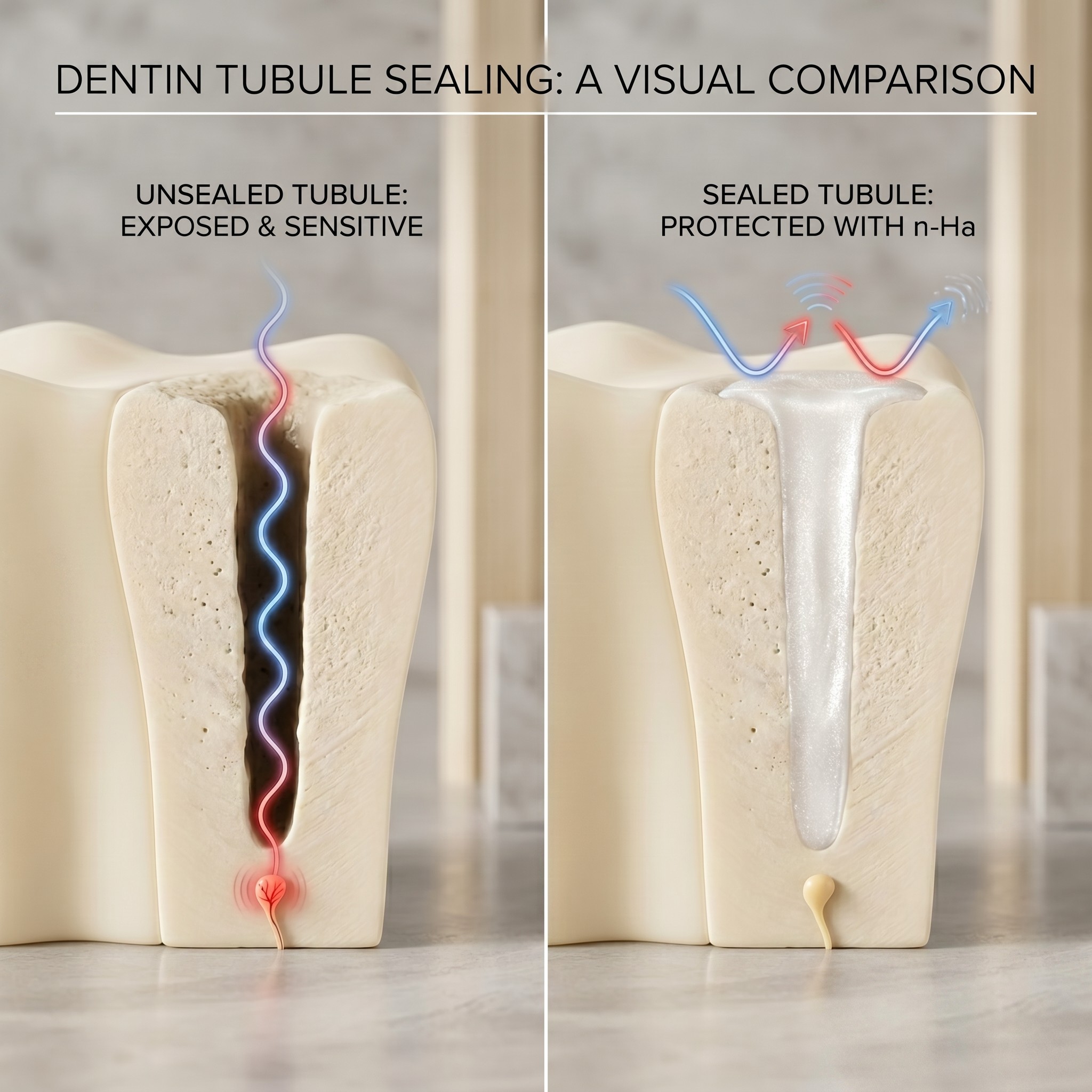
Dentin contains thousands of microscopic channels called dentin tubules that lead directly to the tooth's nerve center. When hot, cold, or sweet stimuli reach these open pathways, they trigger rapid fluid movement inside the tubules. This is known in dental physiology as the Hydrodynamic Theory of Dentin Hypersensitivity, and it is the source of that sharp, sudden pain associated with sensitive teeth.
How Nano-Hydroxyapatite Works
While traditional fluoride toothpastes react with existing minerals to form a temporary protective coating called fluorapatite (Ca₁₀(PO₄)₆F₂), nano-hydroxyapatite works by direct structural replacement.
Because n-Ha nanoparticles (sized between 20 and 50 nanometers) match the exact size and crystal geometry of natural tooth minerals, they exhibit high biocompatibility and affinity. When you brush with n-Ha:
Tubule Occlusion: The nanoparticles penetrate deep into exposed dentin tubules, physically packing and sealing them. This blocks the movement of fluid and stops sensitivity pain at the root.
Enamel Remineralization: The particles deposit calcium and phosphate ions back into the microscopic pits and fissures of demineralized enamel. This repairs early-stage cavities (micro-cavities) before they require drilling.
Smooth Surface Polish: By filling in microscopic surface rough patches, n-Ha leaves the teeth feeling glassy and smooth. This makes it difficult for plaque-causing bacteria to adhere to the enamel.
NOTE:
Unlike fluoride, which carries a toxic warning label if swallowed in quantities larger than a pea, nano-hydroxyapatite is a natural bodily mineral. It is swallow-safe, non-toxic, and biocompatible.
The Clinical Verdict
Multiple double-blind clinical trials have demonstrated that a 10% concentration of nano-hydroxyapatite is as effective as fluoride in remineralizing enamel, while showing superior performance in reducing dentin hypersensitivity.
By integrating a medical-grade 10% concentration of n-Ha into our Luna Night Paste and a concentrated 15% dosage in our Overnight Enamel Repair Serum, Lunovya delivers targeted clinical remineralization during the hours your teeth need it most.
Related Articles